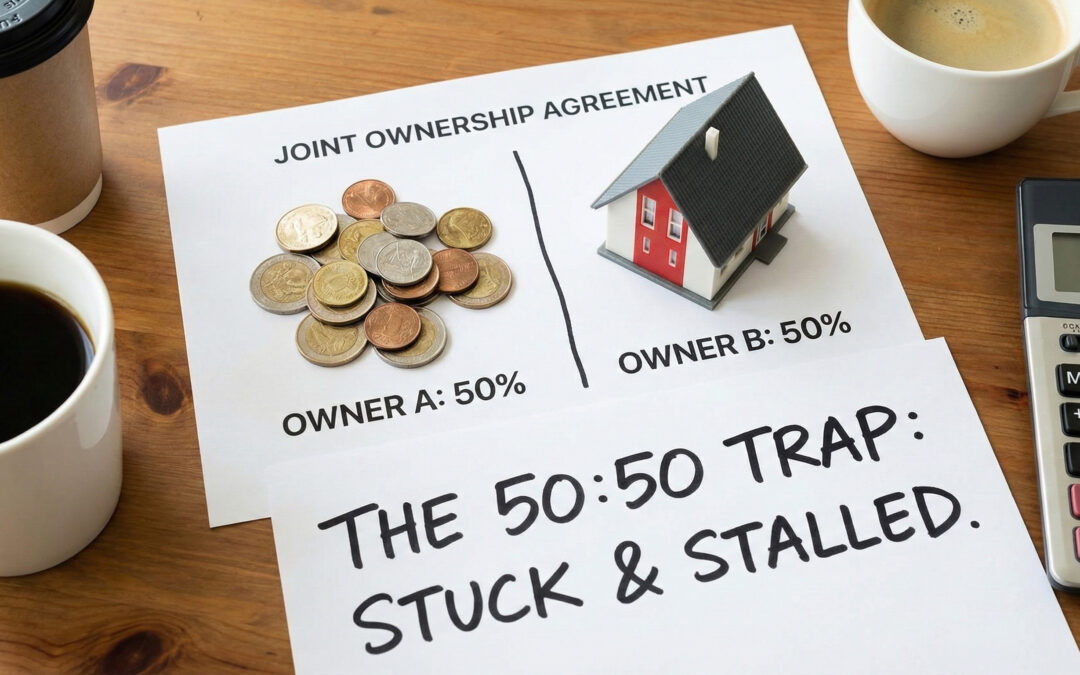
When spouses or civil partners own an investment property together, the default “rule of thumb” is that the rental income is split 50:50 for tax purposes. However, a recent tax tribunal case (Moss v HMRC [2025]) serves as a stark reminder that this rule isn’t absolute—and getting it wrong can lead to unexpected tax assessments.
Understanding the “50:50 Rule”
As long as a married couple or civil partners are living together, HMRC automatically treats them as entitled to the rental income in equal shares. This applies regardless of who actually receives the cash or whose bank account it sits in.
However, this rule stops applying if:
- The couple separates permanently.
- The couple formally declares a different split to HMRC (using a “Form 17”).
A Cautionary Tale: Moss v HMRC [2025]
In this recent case, a husband and wife jointly owned a property. After the husband moved abroad and communication ceased, the wife let the property out via Airbnb to cover debts and living costs.
Because they were still technically married and the property was in joint names, it might have been assumed that the income should be split 50:50. The Tribunal disagreed.
The Ruling: Because the separation was permanent, the 50:50 rule was “disapplied.” Even though the rental income was used to pay off joint debts (benefiting the husband), the wife was the only one receiving and entitled to the income. Therefore, she was liable for 100% of the tax on those profits.
Can You Choose a Different Split?
If you and your spouse are living together but one of you is in a lower tax bracket, you may want to move away from the 50:50 default to be more tax-efficient.
How to change the split:
- You must actually own the property in unequal shares (e.g., as “Tenants in Common” with a 70/30 split).
- You must submit a Form 17 Declaration to HMRC within 60 days of the agreement.
- Without this form, HMRC will continue to tax you 50:50, even if your legal ownership is different.
Summary Checklist for Joint Owners
- Are you separated? If the separation is likely to be permanent, the 50:50 rule no longer applies. The person “entitled” to the money pays the tax.
- Is one spouse a lower-rate taxpayer? Consider changing the beneficial ownership and filing a Form 17 to reduce the overall tax burden.
- Evidence is key: HMRC’s Property Income Manual emphasizes “establishing the reality of the situation.” Keep records of who receives the income and how it is used.
Disclaimer
This newsletter provides general information regarding UK property tax and does not constitute specific professional advice. Tax treatment depends on individual circumstances and the legal structure of property ownership. Joint owners should seek professional guidance before changing how they report income to HMRC.